Glass Manufacturing Equipment
Producing economically with components made of precious metals – at first glance that appears to be a contradiction in the field of glass making. However, many of our customers have already achieved a good relationship between total costs and value, and now use precious metal components on a large scale.
Producing Economically - Even with Precious Metal
Precious metals are, without question, expensive. Furthermore, the prices develop dynamically, so that the use of precious metals requires a certain degree of management – with corresponding effort.
However, precious metal components are very durable and give the plant user the possibility of optimizing production by reducing downtime and unplanned set-up and changeover times. At the same time the risk of defective products can be minimized and an improvement in specific quality characteristics of the customer’s products can be achieved. And best of all the precious metal can finally be recycled and reused in new components.
Thus, the use of precious metal can be an economic proposition for you.
The correct choice of material is of decisive importance in this matter, as precious metal components have to withstand differing conditions. Components that have to maintain their shape when exposed to continual static loads require high strength materials with a high degree of resistance. On the other hand, in fields with many temperature changes and thus changes in loading, material properties such as high elasticity at high temperatures are required. All components, however, require high stability of the weld joints and high resistance to corrosion by aggressive media. Therefore, all customers, not just those with special requirements, set high demands on the component manufacturer regarding expertise, material portfolio, material quality, production techniques and global presence. And the customer can let his competent partner look after the expensive management of his precious metal professionally.
With the right partner and the right material everything can be obtained from one source: from purchasing the raw material and manufacturing the component, including financing and coverage of risks, together with recycling and reimbursement. This circuit reduces effort and tied capital to a minimum.
Optimizing the Glass Quality
Manufacturers who wish to distinguish themselves require more than just standard properties. Anyone who knows the high demands in processing standard glasses can imagine the challenges posed by glasses with special properties.
Optical glasses must be free from discolorations and must demonstrate high transparency and good homogeneity. The quality can be characterized by parameters such as the specific refractive index. Glasses for displays are further optimized to give high scratch resistance and mechanical bending strength. Other demands are imposed on medical glasses for analytical and pharmaceutical applications, e.g., hydrolytic resistance or good resistance to acids or alkalis. Tableware has its own challenges. It should be sparkling, heat resistant, dishwasher resistant and should be unbreakable even with very thin wall thicknesses. Glass fibers require a high softening temperature and high strength and corrosion resistance in order to stand up to the high demands of insulating materials, fiber reinforcement, glass fiber armoring or flame protection. The list of requirements is almost infinite.
Wastage of the valuable glass finished product can, among other means, be reduced by avoiding ceramic particles from refractories, as these often lead to inclusions and thus to glass which cannot be used for the intended purpose. Undesirable striae and bubbles can be reduced by efficient homogenization at ever higher temperatures. New glass compositions also frequently require higher processing temperatures, causing increasingly severe corrosion of the refractories. These negative effects can be significantly reduced by using platinum lined ceramics as well as crucibles, stirrers, pipe systems and nozzles made from platinum alloys.
For this purpose our customers require components that are made from just the right material to meet their requirements. The optimum result requires a broad portfolio of alloys, comprehensive manufacturing capabilities, many years of experience and high technical competence in advising customers.
Optical Glasses
Are purity, transparency, and the avoidance of discoloration in the glass important for you in manufacturing specialty optical glasses? Heraeus helps you to achieve these goals and to optimize your products. Profit from our many years experience.
Your Benefits in Summary
- Purity and transparency – the high purity and chemical resistance of our platinum materials enable the manufacture of your high purity optical glasses.
- No discolorations – by means of high purity rhodium-free materials.
- Customer-specific solutions – which we develop and optimize jointly with you using our great expertise. Components can be supplied individually or as serial products.
- Long service life of the components, resulting from the high strength and high ductility of the Pt materials even in the weld joints.
- Standards – we are certified to DIN EN ISO 9001:2008 and DIN EN ISO 14001. In the manufacture of high quality products, we work to the 5S standard and monitor processes by audit management. SixSigma tools are used for systematic process optimization.

Fields of Application of Optical Glasses
- Aspherical and spherical lenses
for high value camera objectives, projectors, microscopes, telescopes, binoculars, smart phones, laser applications, night vision devises, spectacle lenses - Cylindrical lenses
for barcode scanners and laser projectors - Optical filter glass
for analysis, photography, medical technology and laser protection - Windows (plane parallel polished components for distortion-free light transmission in optical systems)
- Substrates (e.g., materials for interference filters)
- Special glasses for radiation absorption (lead glass)
- Antique glasses (flat glass with wavy surface and defects, e.g., for glazing church windows
- Colored glass (flat glass) for artistic use
- Weather resistant anti-reflective coatings on flat glass (e.g. glass for museum display cabinets, protection of valuable pictures)
- Architectural glass (flat glass / soda-lime glass) and their diverse coatings
Portfolio
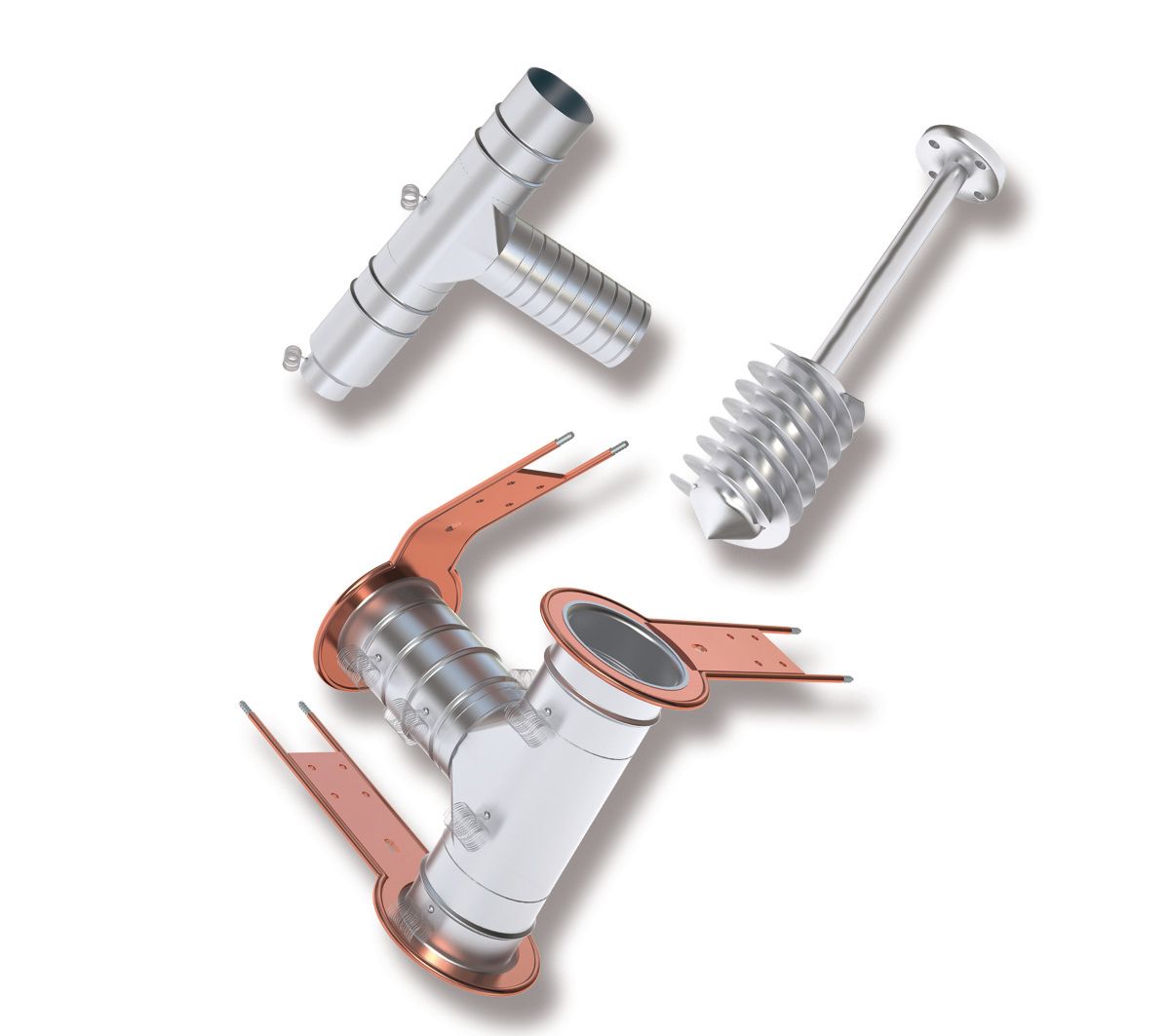
- Crucibles
- Feeder systems
- Stirring cells
- Stirrers and plungers
- Refining chambers / refining systems
- Bubbler pipes
- Electrodes
- Protective thimbles for thermocouples
- Platinum cladding of ceramics
- Orifice rings and outlet tubes
- Mandrills for making glass tubes
- Danner pipes
- Manufacture of other custom made components
Individual Design for the Perfect Process
Our solutions are available both for batch production and for continuous melting processes. They are employed for melting down, homogenization, and portioning. Component designs, individually agreed with you, enable the production of glasses to meet your requirements.
The melting equipment is often supported mechanically from outside by a ceramic which also serves as heat insulation. To prevent damage to the component, the thermal expansion behavior of the platinum components and the ceramics have to be considered. We are pleased to support you in the continuous optimization of your system.
Pure Platinum for a better View
We make it possible for you to melt a large number of glass types in order to offer optical systems without imaging defects. The performance and quality of the optical components is influenced already in the melting process. In this the challenge is to avoid defects and discolorations and to guarantee good homogeneity and high transparency in the glass.
Heraeus produces equipment (e.g., melting crucibles, feeder systems, components for the Vello and Danner processes…) from rhodium-free platinum alloys of the highest purity in order to prevent discoloration in optical glasses. We are pleased to support you in the selection of the appropriate materials for you application.
- Pure Pt: When the highest purity is essential.
- Pt-CH: When the highest purity and a perceptible increase in strength are essential.
- Pt DPH: For strong components with stable shape and highest purity which can accommodate thermal expansion in the heating phase without damage.
- Pt DPH-A: For high strength active components of highest purity in which torsional and dimensional stiffness are essential.
Looking for the right material? Our Material Database may help.
Technical Glasses
Is it important for you to maintain purity to achieve high application temperatures and meet characteristic glass properties in the manufacture of special technical glasses? Heraeus will help you to attain these goals and to optimize your products. You can profit from our years of experience.
Your Benefits in Summary
The processing of glasses with higher melting temperatures is possible because the melting point of the platinum alloy is increased by rhodium alloy additions.
- Special properties of the glasses – the high melting, creep resistant PtRh materials enable the production of technical glasses with special properties.
- Optimum system design – because the platinum materials can be fully combined with each other.
- Solutions specific to the customer, which we design and optimize jointly with you using our excellent expertise. Components can be supplied individually or as a series of items.
- High durability of the components highlighted by the high strength and high ductility of the PtRh materials even in the weld joints.
- Standards – we are certified to DIN EN ISO 9001:2008 and DIN EN ISO 14001. In the manufacture of high quality products, we work to the 5S standard and monitor processes by audit management. SixSigma tools are used for systematic process optimization.
Fields of Application of Technical Glasses
- Display glasses
for televisions, monitors, laptops, handheld computers, smart phones - Medical glasses
for analytical and pharmaceutical applications, e.g., Erlenmeyer flasks, ampoules, glass tubes, glass rods, laboratory glass - Glass-ceramics
for cooking hobs, mirror supports for large telescopes, high-power reflectors for digital projectors, dental prostheses - Tableware
- Hollow glass
- Measurement technology
- Mirrors and reflectors for digital projection
- Glazed fronts for fireplaces
- Glazing for refrigerators (with anti-bacterial coating, upright and chest refrigerators)
- Borosilicate glass with high chemical resistance
- Thin glass as a support for wafers
- Flexible glass
- Glass-metal composites with tailored CTE
Portfolio
- Crucibles
- Feeder systems
- Stirring cells
- Stirrers and plungers
- Refining chambers / refining systems
- Bubbler pipes
- Electrodes
- Protective thimbles for thermocouples
- Platinum cladding of ceramics
- Orifice rings and outlet tubes
- Mandrills for making glass tubes
- Danner pipes
- Manufacture of other custom made components
Individual design for the perfect process
Our solutions are available both for batch production and for continuous melting processes. They are employed for melting down, homogenization, and portioning. Component designs, individually agreed with you, enable the production of glasses to meet your requirements.
The melting equipment is often supported mechanically from outside by a ceramic which also serves as thermal insulation. To prevent damage to the component, the thermal expansion behavior of the platinum components and the ceramics have to be considered. We are pleased to support you in the continuous optimization of your system.
A special Challenge for each Type of Glass
We offer you glass melting equipment with which you can manufacture glasses to meet your technical demands. Whereas display glasses require a high resistance to scratching, medical glasses for analytical and pharmaceutical applications have to demonstrate good resistance to acids or alkalis.
You can produce high purity technical glasses to meet special requirements using our equipment based on platinum-rhodium (e.g., melting crucibles, feeder systems, components for the Vello or Danner process...). The advantage of the platinum alloys containing rhodium is the increased strength combined with the higher melting point of the equipment, thus enabling the processing of very demanding glasses. We are pleased to support you in the selection of the suitable materials for your application.
- Pt-10%Rh and Pt-20%Rh: if a conventional material is required.
- Pt-10%Rh DPH: for high strength, dimensionally stable components which can withstand thermal expansion in the heating phase without damage.
- Pt-10%Rh DPH-A: for high strength active components in which stiffness in torsion and dimensional stability are essential.
Looking for the right material? Our Material Database may help.
Glass Fibers
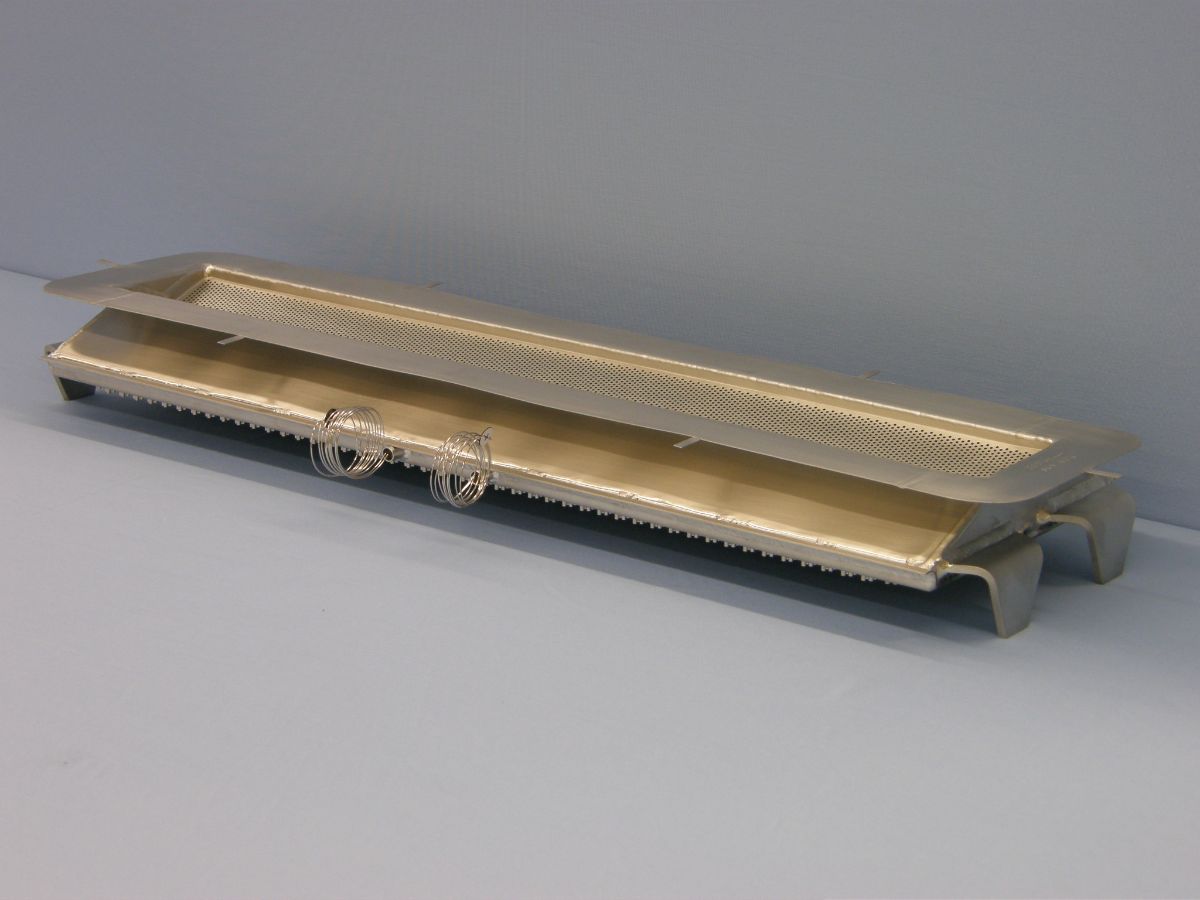
In the production of glass fibers, unhindered fiber drawing subsequent to the melting process is of great significance. The continuous flow of the melt should ensure that fibers do not tear off and that the diameter of the fine fibers remains constant. Heraeus will help you to achieve this goal and to optimize your products. Profit from our many years experience.
Your Benefits in Summary
- An experienced partner in the field of manufacturing glass fiber bushings
- Short delivery times as we offer the necessary complete package of logistics and expertise
- High quality bushings by means of state of the art production technologies and the most modern materials
- High strength and minimum sagging as prerequisite for a long service life
- Optimized design as a prerequisite for the manufacture of uniform fibers
Fields of Application of Glass Fibers
Glass fiber bushings are used for a multitude of glass fibers of C and E glasses and for the production of basalt fibers, i.e., for more than 90% of all fibers produced worldwide.
- Continuous fibers
for woven and non-woven textiles - Short fibers
for thermal insulation materials in houses, sound and fire protection of tanks, containers and turbines, reinforcement fibers in circuit boards, strengthening of plastics and plasterboards, concrete reinforcement
Portfolio
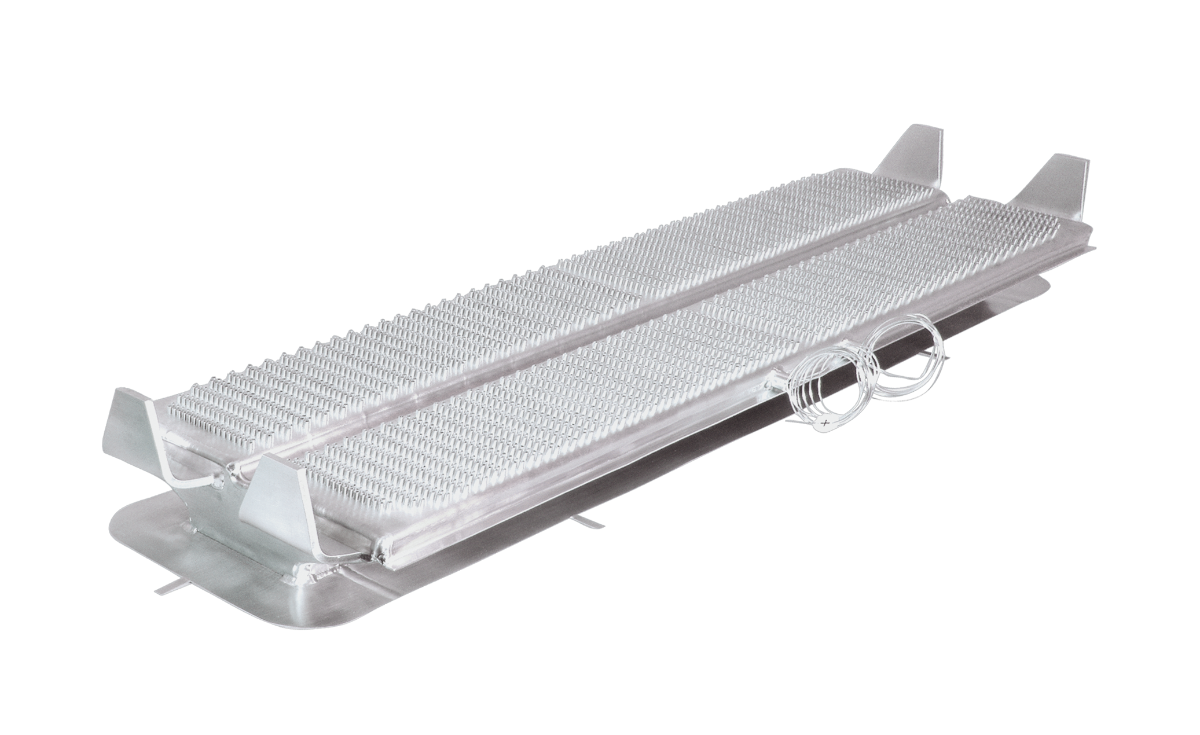
Glass fiber bushings:
- with TIG-welded tips
- with laser-welded tips
Basalt fiber bushings:
Bushings for extreme thermal and corrosive conditions, such as those encountered for example in processing molten basalt, S-glass and mineral glasses.
Individual design for the perfect process
The first glass fibers were manufactured in Hamburg by W. von Paczinsky in 1908 using a bushing. Industrial production started in the USA in 1930 and in Germany in 1939, initially using 51-, 102- and 204-tip bushings. Heraeus has been producing glass fiber bushings since 1970. The designs have been continually optimized and, by reducing the spacing, the number of tips has been increased to 4000 and more. To meet customer requirements, bushings can be made both for the two-step process, in which glass pellets are melted on a perforated sheet and subsequently drawn to fibers, and for the single-step process, in which pre-melted glass is fed into the bushing. We would be pleased to assist you in continually optimizing your system.
A special Challenge for each Type of Glass
Welded tip plates have the advantage that the tip geometry can be designed at will (e.g., variable distribution of the diameter and stepped internal diameter) and the materials for the tips and the remaining bushing do not have to be identical. In this way, load bearing parts of the bushing can be made from materials with maximum strength and service life. The particle strengthened DPH materials are available for this purpose. We would be pleased to advise you in selecting the right materials for your application.
- Pt-10%Rh and Pt-20%Rh: if a conventional alloy is required.
- Pt-10%Rh DPH: for high strength, dimensionally stable tip plates.
- Pt-10%Rh DPH-A: for high strength dimensionally stable tip plates with reduced precious metal inventory.
Looking for the right material? Our Material Database may help.