Fuel Cell Catalysts for PEM Fuel Cells
Proton exchange membrane (PEM) fuel cells convert hydrogen and oxygen into water while generating electrical energy. Fuel cells are used in a wide range of applications, including heavy-duty transport, maritime applications, and stationary power systems. When designing PEM fuel cells, the fuel cell catalyst plays a pivotal role. It must provide the right balance of activity, durability, and flexibility to meet the operating conditions of the intended application.

PEM Fuel Cell Catalyst Portfolio
In PEM fuel cells, platinum-based fuel cell catalysts support the electrode reactions within the fuel cell stack. These reactions convert hydrogen and oxygen into water while generating electrical energy with high efficiency under a wide range of operating conditions. The performance of a PEM fuel cell catalyst depends on achieving the right balance of activity, durability, and precious metal utilization.
The Heraeus portfolio includes PEM fuel cell catalysts with different precious metal loadings to support varying application requirements and performance targets. Our portfolio ranges from established catalyst technologies to advanced hydrogen fuel cell catalyst materials designed to meet the evolving demands of transportation and stationary applications.
To identify the most suitable fuel cell catalyst for a specific application, Heraeus conducts testing and evaluation in fully equipped on-site laboratories and test centers. This enables the development and optimization of PEM fuel cell catalyst solutions tailored to individual operating requirements.
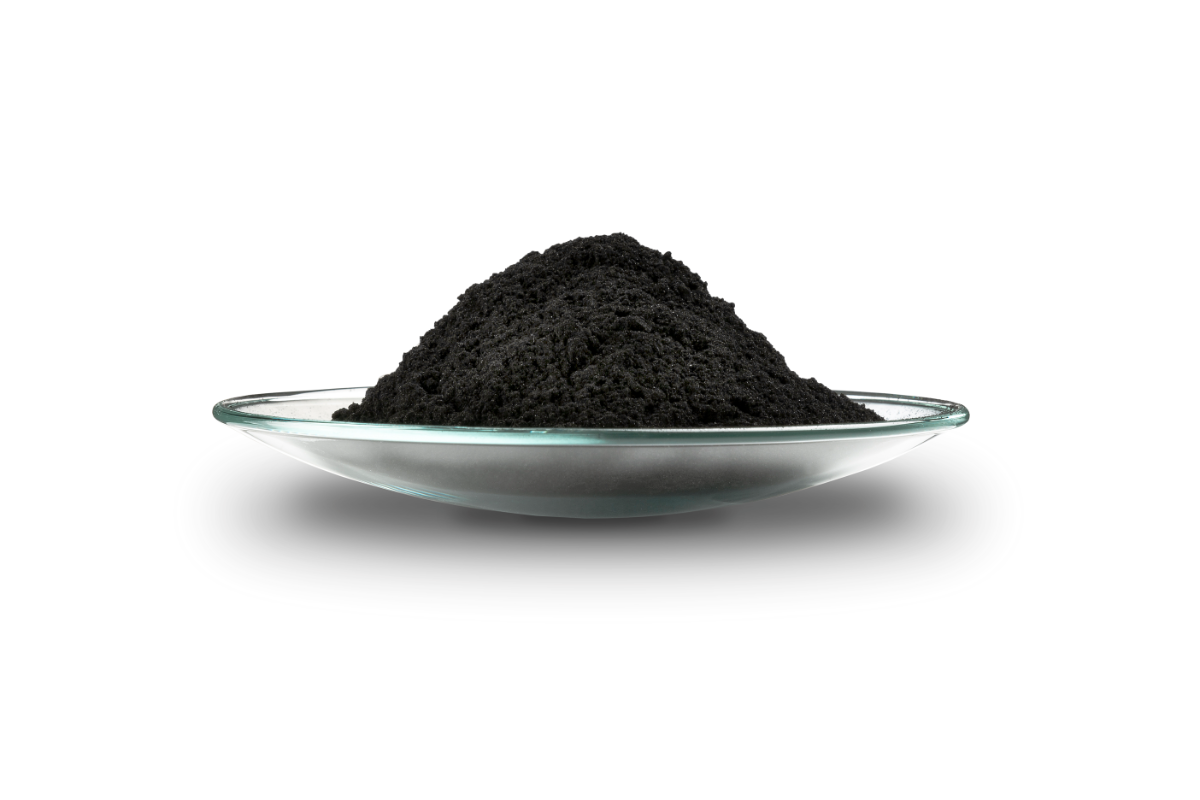
| Catalyst | Actydon | Pt C100 + Actydon | Ir 80 X |
Actydon | Pt C700 | Actydon I Pt 50 C720 | Actydon | Pt 50 K700 |
|---|---|---|---|---|
| Description | 20 to 40 wt.% Pt on graphitized carbon material – optional with OER additive for even higher CRT |
20 to 60 wt.% Pt on high surface area carbon | 50 wt.% Pt on high surface area carbon support | 50 wt.% PtCo on high surface area carbon |
| Highlight | High cell reversal tolerance > 8000 s (15 μg Ir /cm²) (~75 s w/o OER additive)** |
Optimized Pt surface utilization High ECSA |
High performance under various conditions even dry ones | Higher Pt-dissolution stability compared to established PtCo/C catalyst |
| ECSA [m²/gPt] | > 40 | > 70 | > 75 | > 45 |
| Cell voltage @ 0.1 A/cm² (CCM)* [V] |
~ 0.80 | ~ 0.84 | ~ 0.87 | ~ 0.84*** |
| Request more information | Request more information | Request more information | Request more information |
*Automotive conditions **Cell reversal tolerance time until -1.25 Vcell ***At 0,2mgpt/cm2
Your Expert for Catalysts for PEM Fuel Cells

PEM Fuel Cell Applications
PEM fuel cells are used in a wide range of mobile and stationary applications. These include power storage systems, material handling vehicles, passenger cars, heavy-duty transport, as well as trains and buses. In the transportation sector, hydrogen fuel cells compete in part with battery electric technologies. However, fuel cell vehicles offer advantages for long-range and heavy-duty applications due to shorter refueling times and higher driving range.
The growing focus on reducing carbon dioxide emissions and supporting climate-neutral technologies is expected to foster the deployment of PEM fuel cells. Increasing adoption of fuel cells in transportation and other areas may also contribute to lower system costs through scaling effects and industrialization.
Heraeus provides precious metal-based fuel cell catalysts for both the cathode and anode side of catalyst coated membranes (CCM). The portfolio supports a broad range of fuel cell applications across stationary and transportation sectors.
Applications
- Heavy Duty
- Passenger Cars
- Trains and Buses
- Aviation
- Material Handling Vehicles
- Maritime
- Drones
- Stationary systems
PEM Fuel Cell Technology & Operation
PEM fuel cells generate electrical energy through the electrochemical reaction of hydrogen and oxygen. At the center of the process is the proton exchange membrane, which enables proton transport while separating the reactant gases. The proton exchange membrane also influences water management and ion transport within PEM fuel cells. Platinum catalysts for fuel cells support the electrode reactions at the anode and cathode side and play a critical role in fuel cell performance, efficiency, and durability.
Compared with other fuel cells, PEM fuel cells operate at relatively low temperatures and offer fast system response times. These characteristics make them suitable for applications that require dynamic operating profiles, including fuel cell vehicles, stationary systems, and heavy-duty transportation.
Advances in PEM fuel cell catalyst development continue to support higher power density, lower precious metal loading, and improved long-term stability. Each PEM fuel cell catalyst must balance catalytic activity, durability, and material efficiency for demanding industrial applications. These developments contribute to the broader commercialization of hydrogen fuel cells across transportation and industrial applications.
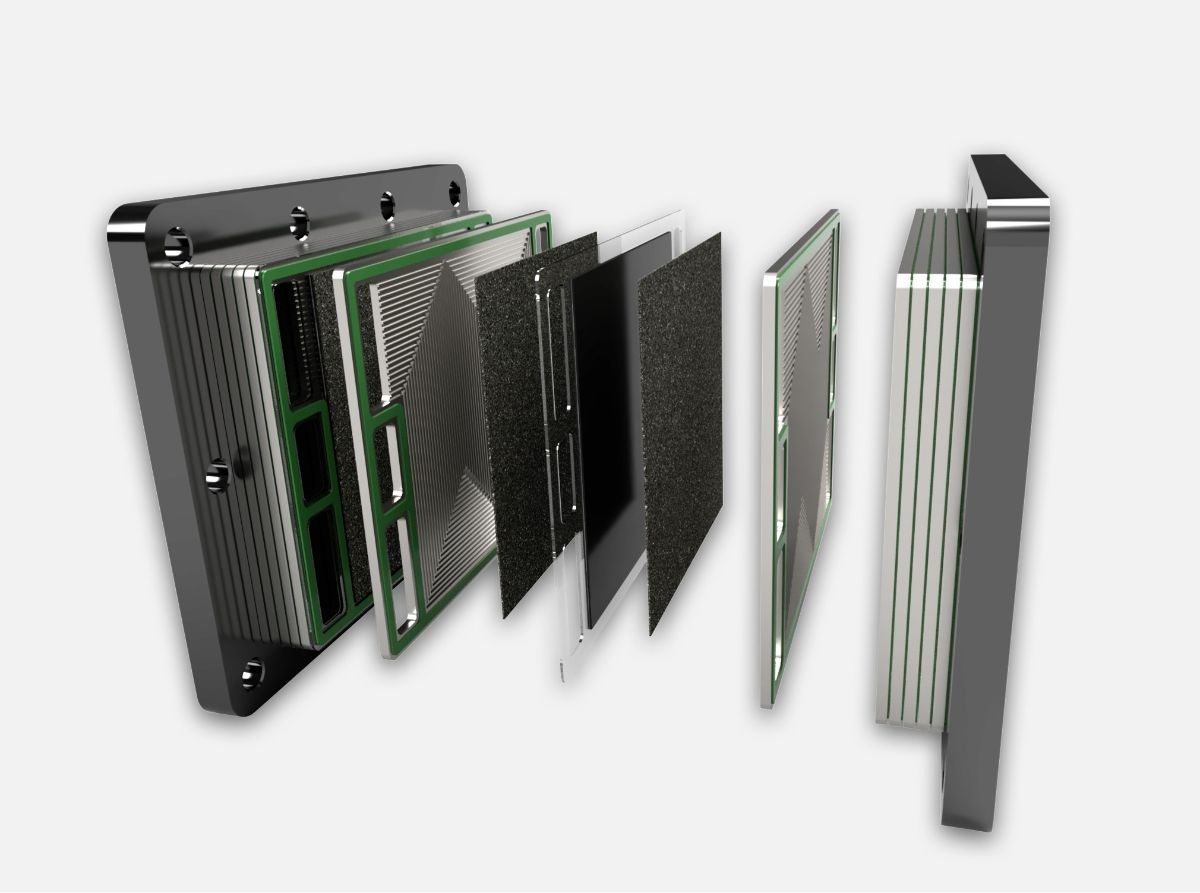
Catalyst Coated Membranes (CCM) / Membrane Electrode Assembly (MEA) for Fuel Cells
Heraeus Precious Metals advanced CCM and MEA solutions are developed to meet the requirements of modern fuel cell stacks and systems. Whether deployed in commercial vehicles such as buses and trucks, marine vessels, or stationary power units, these solutions are engineered to deliver outstanding durability, high efficiency, and long service life. Combining the know-how in stack design and system integration by Freudenberg e-Power Systems with the in-depth expertise in precious metals catalysts by Heraeus Precious Metals, we offer high alignment with modern fuel cell operation, industrial production scales and precious metals services that enable large production volumes.
Catalyst Coated Membranes (CCM)
Catalyst Coated Membranes are critical components for fuel cell systems, as catalyst and catalyst layer design largely determine the overall system-level performance and durability. The quality of the CCM is pivotal for the efficiency, performance, and durability of fuel cells, enabling reduced operating costs over the whole lifespan of a stack.
With this partnership, Heraeus Precious Metals and Freudenberg e-Power Systems were able to create unique layer structures and catalyst particle size and distribution that enhance the performance in terms of both efficiency and durability. The performance and stability optimized CCMs thus lead to a long lifetime and lower total cost of ownership.
This results in a empirically proven CCM portfolio that addresses all aspects of commercial and technical competitiveness.
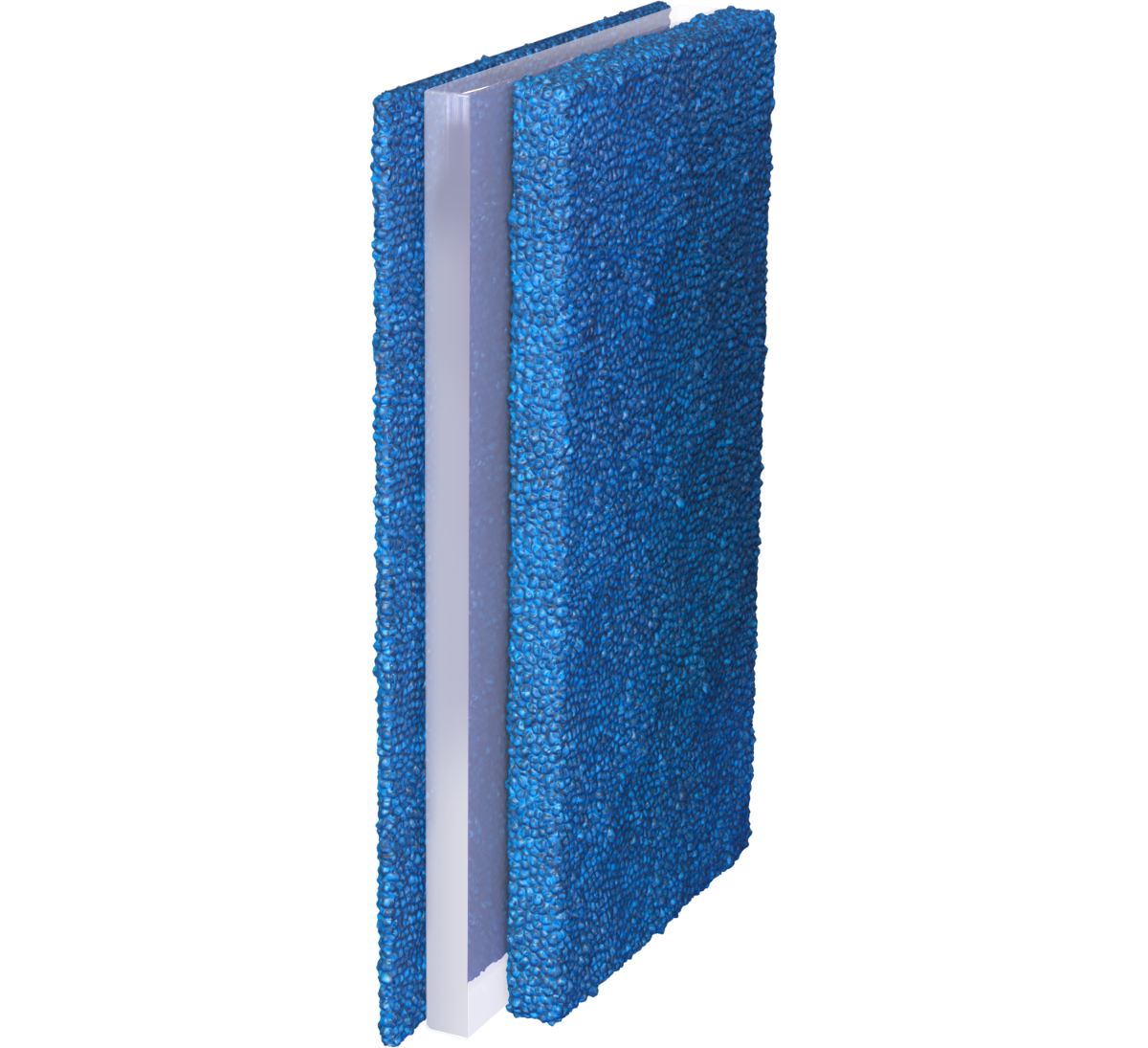
| Actydon | CCM 01 | Actydon | CCM 02 | |
|---|---|---|
| Highlight | High efficiency, flexible humidity range, high durability |
High current density, high durability |
| Cell voltage* @ 0.1 A/cm² [V] | 0.88 | 0.86 |
| Current density* @ 0.65 V [A/cm2] | 1.9 | 2.0 |
* Differential setup (RH 95%, 80 °C)
-
Efficiency: Enhanced Catalyst efficiency.
-
Durability: Extended operational lifespan with minimal degradation.
-
Automation: Highly automated roll-to-roll production processes.
-
Sustainability: Manufacturing with efficient use of resources.
-
Circularity: Holistic precious metals sourcing and recycling concept.
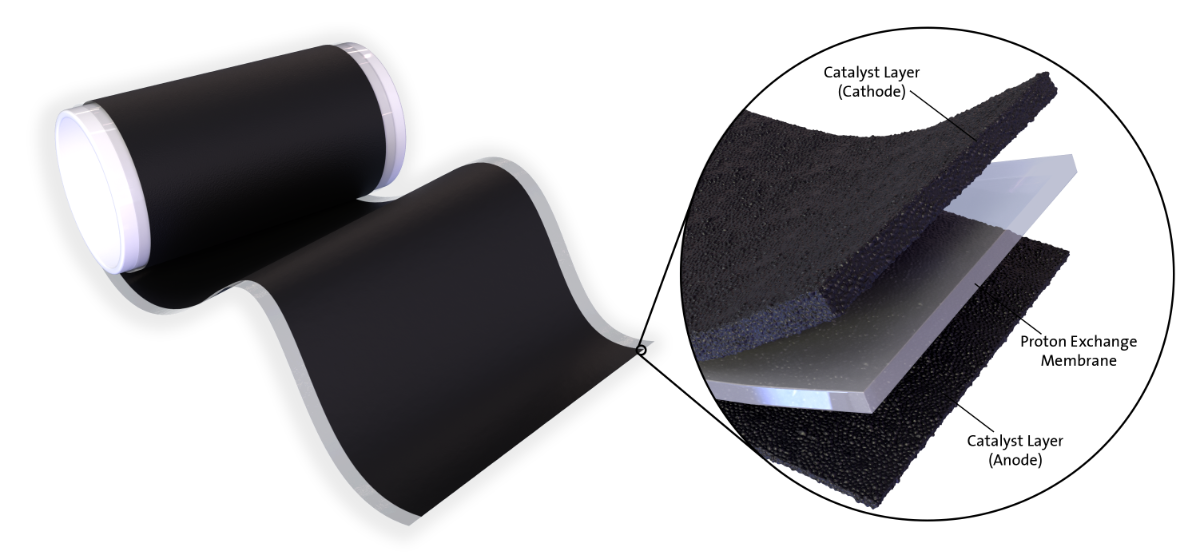
Membrane Electrode Assembly (MEA) for Fuel Cells
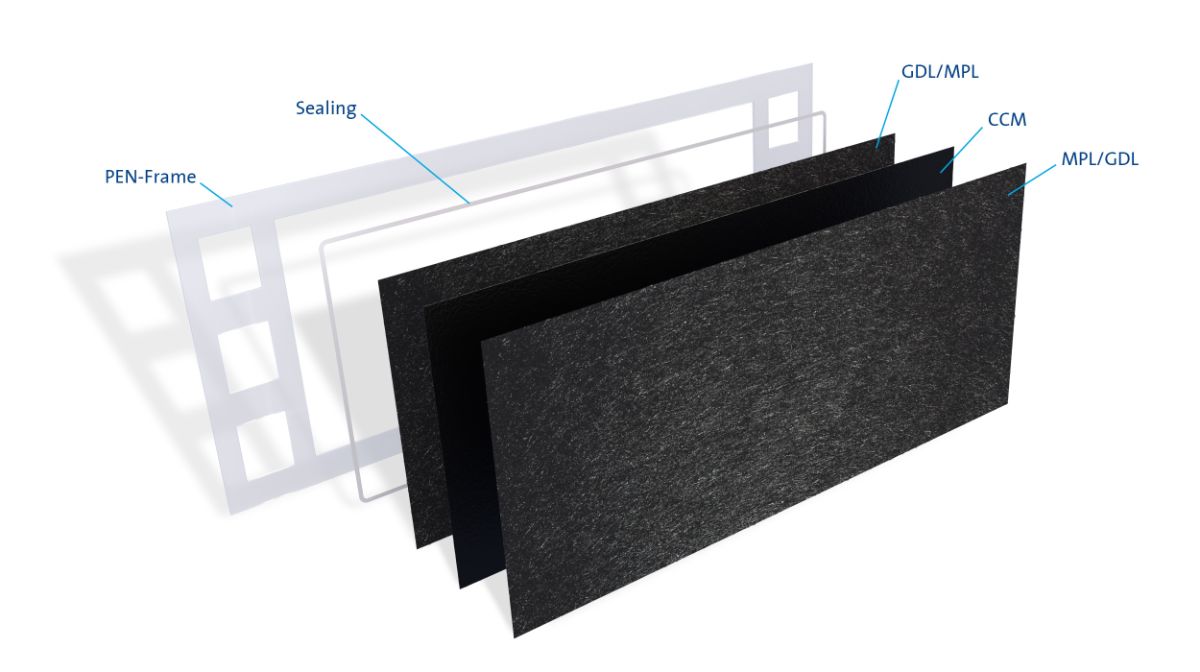
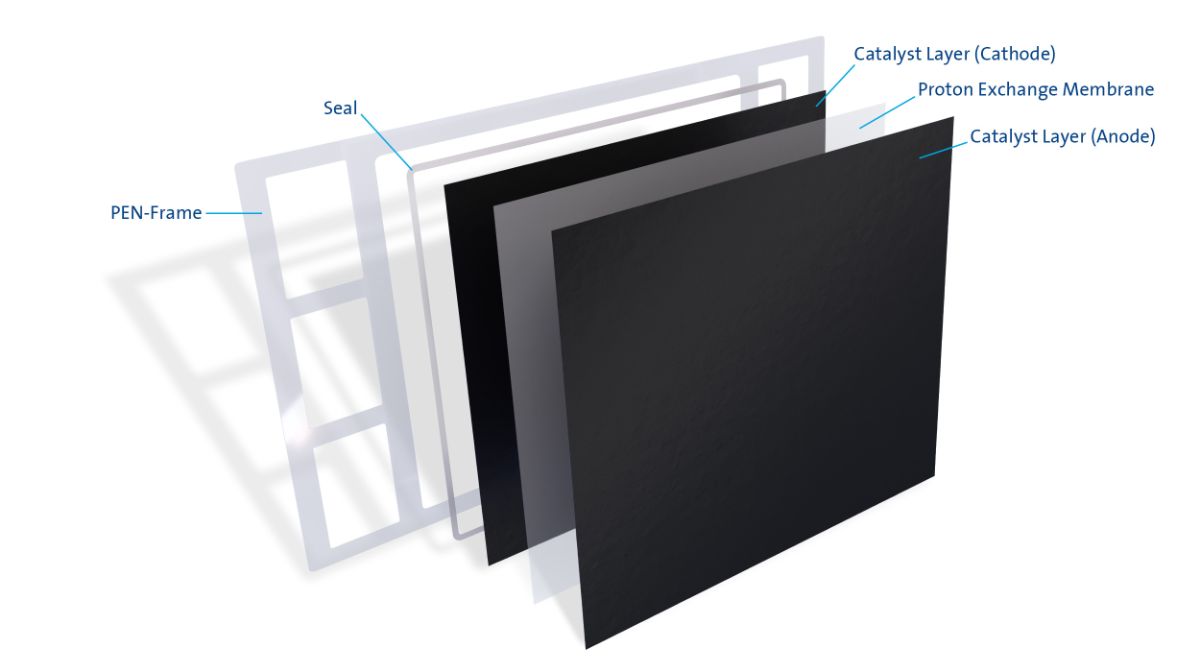
All high-volume catalyst-coated membrane (CCM) variants are also available as membrane electrode assembly (MEA) configurations utilizing the know-how of FEPS in sealing technologies and gas diffusion layers (GDL). The available MEA7 structure is a 7-layer structure, comprised of CCMs laminated with advanced gas diffusion layers (GDLs) and customized frame. A tailored sealing solution integrates the entire cell architecture into a precisely engineered polymer frame, ensuring easy handling and efficient integration into fuel cell stacks. This sealing approach effectively eliminates gas crossover, contributing to extended operational lifetimes.
By adopting Heraeus Precious Metals’ high-volume MEA program, you gain access to the full performance advantages of the unique CCM technology while minimizing the cost for MEA manufacturing equipment. This strategy enables a reduction in the Total Cost of Ownership (TCO) for PEM fuel cells through three key avenues: a) utilization of high-performance, durability-enhanced catalysts; b) operational cost savings via the scalable production facility; and c) sustainable material management through closed-loop recycling, covering both production waste and end-of-life components.
-
Activity: Engineered GDL and MPL structures for enhanced mass transport properties.
-
Assembly: The MEA7 features a structurally reinforced design with an integrated frame, streamlining the fuel cell stack assembly process.
-
TCO: Reduction of the total cost of ownership (TCO) of PEM fuel cells through performance- and stability-optimized catalysts and electrodes, as well as expertise in metal management and recycling
-
Efficiency: Innovative precious metal deposition results in optimal platinum utilization.
-
Durability: Long lifetime for your application by using electrode layers designed for best stability and reliability.
-
Industrial Scale: Proven industrialization competence in electrochemistry. Established and highly efficient manufacturing technology with integrated quality controls.
Customized CCM and MEA
CCMs and MEAs can be customized to align with the specific requirements of your application, ensuring optimal performance where it is most critical. Leveraging Heraeus Precious Metals’ proprietary catalyst manufacturing technology, you are enabled to maintain outstanding quality while keeping production costs low. This allows for exceptional efficiency and extended operational life, driven by highly active and durable catalyst layers.
These modular, multi-layer assemblies are engineered for high-volume manufacturing and incorporate proprietary sealing materials that provide long-term protection for the active regions throughout all MEA layers. Integrated into a precision frame using a patented lamination technique, they enable simplified handling and streamlined assembly. Heraeus Precious Metals’ MEAs deliver consistent, high-efficiency performance even under demanding, heavy-duty conditions, maintaining reliability across a broad spectrum of humidity, temperature, and pressure ranges—without compromising service life.
By combining extensive fuel cell design expertise with advanced production capabilities, the tailored MEA solutions are both cost-efficient and performance optimized. Heraeus Precious Metals focus is on helping customers minimize fuel consumption and reduce maintenance costs across diverse application environments.
-
Cost Efficiency: Economical manufacturing processes that reduce overall production expenses.
-
Longevity: Extended performance life for reliable, long-term operation.
-
Customization: Tailored solutions designed to meet specific application requirements.
-
Durability: Ultra-stable catalyst layers designed for prolonged activity and minimal degradation.
-
Application Focus: Designs optimized to align with the functional demands of each use case.
| Actydon | CCM 01, Actydon | CCM 02 | Actydon | MEA 01, Actydon | MEA 02 | |
|---|---|---|
| Membranes | Various thicknesses and additives | Various thicknesses and additives |
| Dimensions | Variable coating widths (Max: 460mm) |
Customized solutions (available on request) |
| Delivery Formats | CCM roll or MEA sheets (samples available) | CCM roll or MEA sheets (samples available) |
To deliver this superior level of reliability at industrial scale, Heraeus Precious Metals and Freudenberg e-Power Systems have combined their unique capabilities in a technical partnership: Advanced precious metals expertise meets leading-edge system oriented process know-how, delivering a complete loop from metal sourcing and financing, product supply, to recycling of platinum group metals.
Your Expert for CCM and MEA
Catalytic Solutions to Boost the Fuel Cell Operation - Balance of Plant
Fuel cells convert the chemical energy of the corresponding fuel directly into electrical energy. As decentralized power solutions, fuel cells are considered an important technology for the energy transition.
Different fuel cell technologies are available and differ in areas such as electrolyte type, operating temperature, operating principle, and fuel source. As a result, the technical requirements for supporting system components also vary depending on the application and operating environment.
In addition to PEM electrolyzer catalysts, Heraeus Precious Metals provides catalytic solutions for gas treatment and emission reduction within the fuel cell system environment.
For fuel processing applications, Heraeus offers catalytic technologies for reforming, water gas shift, gas purification, preferential oxidation (PROX), and selective methanation. These catalytic solutions are designed to support reliable and decentralized system operation. Find more details about the Heraeus heterogeneous catalysts in the catalyst selector.

Heraeus Precious Metals also develops catalyst technologies for off-gas treatment and catalytic combustion applications. The focus is on efficient and durable catalytic solutions that support emission reduction and potential energy recovery.
Different fuel cells have specific strengths and operational constraints that influence their suitability for individual applications. Alongside PEM fuel cells, this also applies to technologies such as solid oxide fuel cells. Heraeus supports customers with bulk catalysts and tailored catalytic coatings to optimize balance of plant performance for specific operating requirements.
Your Expert for Catalytic Solutions to Boost Fuel Cell Operation

Readers Asked: Fuel Cell Catalysts for PEM Fuel Cells
Read As Well

Get in Touch With Us

Press and News
Dr Michael George and Dr Christian Gebauer, Heraeus Precious Metals, consider the role hydrogen fuel cells could play in the development of heavy duty vehicle materials.