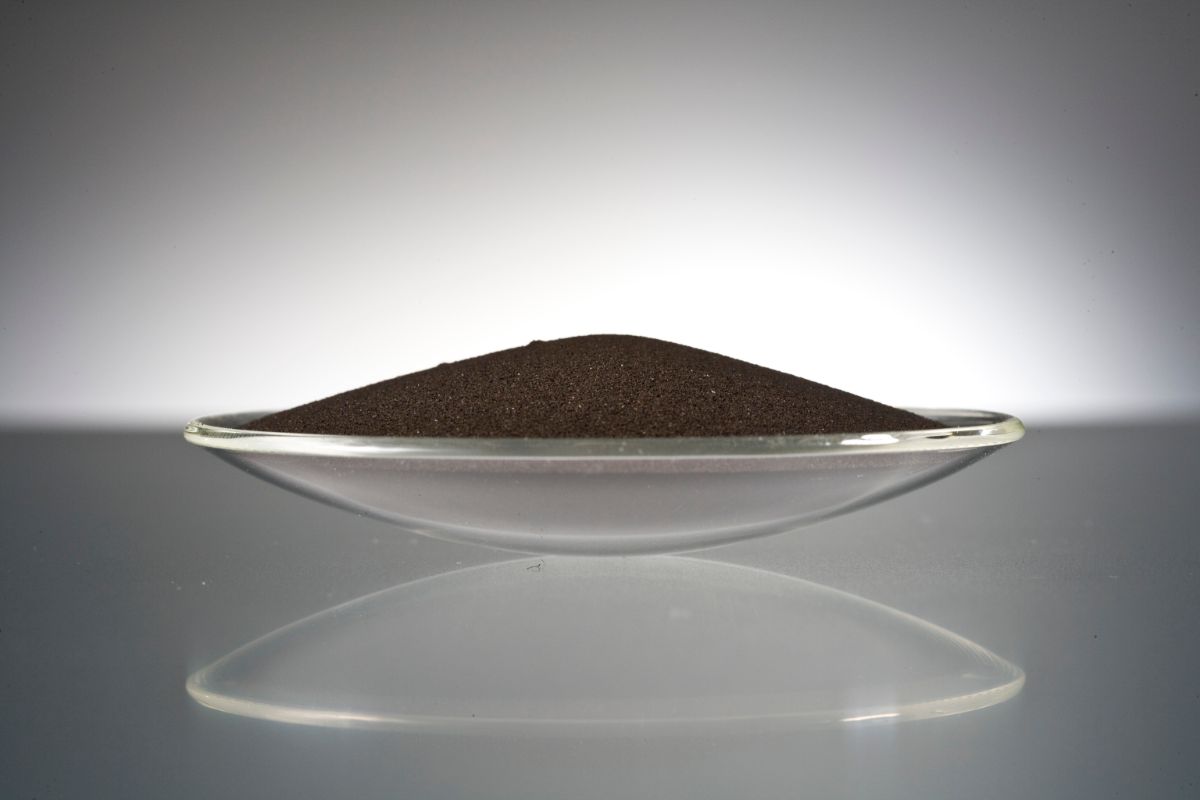
Currently, around nine percent of the mineral oil produced worldwide is used in the chemical industry, forming the basis for the manufacture of a wide range of products such as plastics, pharmaceuticals and paints. In light of climate change, there is a need for biomass to be harnessed by industry as a renewable resource. One source for this can be lignin - a polymer that contains a large number of aromatic building blocks. Unlike fossil petroleum, lignin is sustainable because it is obtained from trees and shrubs. To date, lignin has been used primarily in paper production as an energy source, although it can also be used as a valuable raw material for the chemical industry.
One challenge has been to break down the macromolecules of lignin into monomer and oligomer units on an industrial scale. Heraeus Precious Metals has developed an industrial precious metal catalyst that precisely enables this splitting.
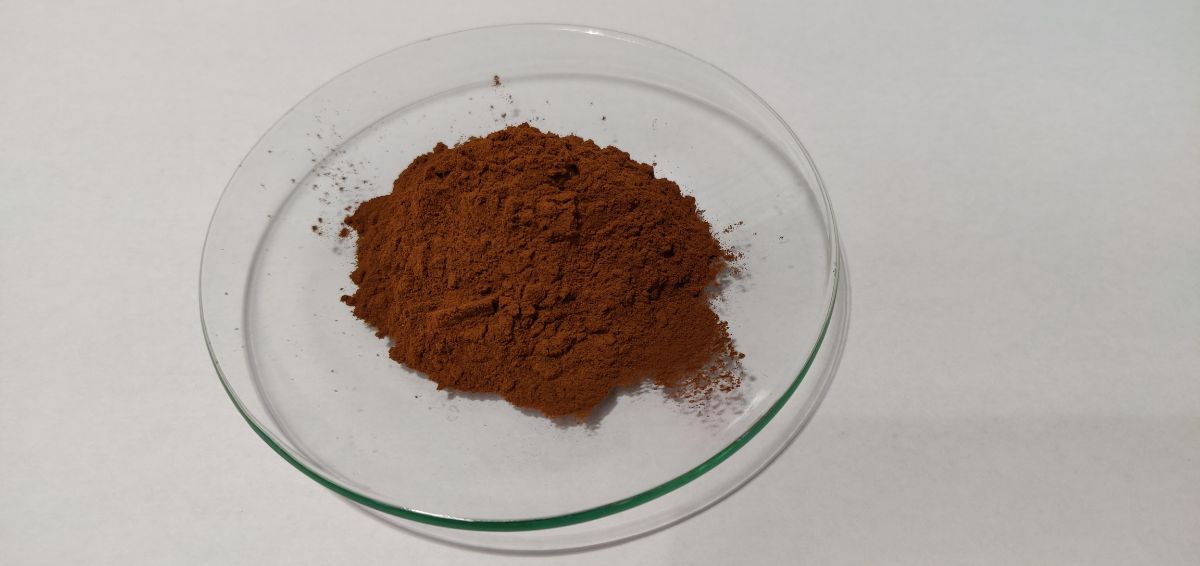
Precious metal catalysts for the efficient conversion of lignin
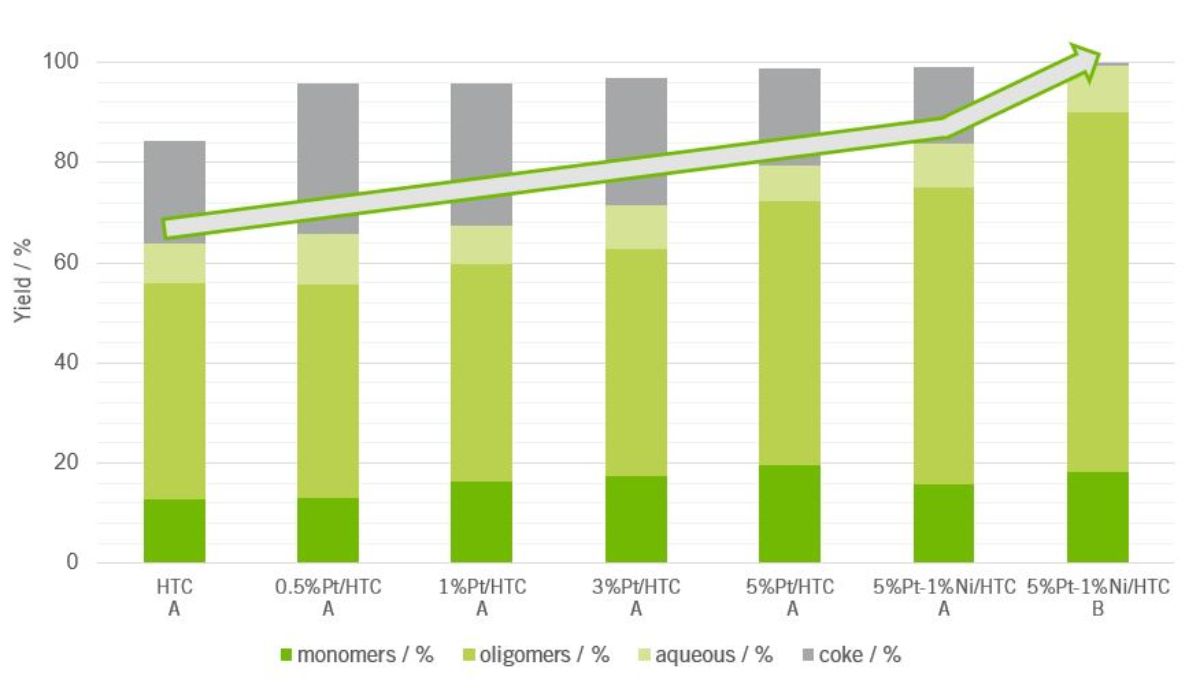
Catalyst performance depends also on the precious metal precursor solutions used and on the characteristics of the support. The experts at Heraeus Precious Metals have investigated that the support material hydrotalcite (HTC) is particularly suitable due to its special properties: It has both acidic and alkaline centers, which have a positive effect on the reaction. In particular, increasing the platinum loading of the catalyst ensures better lignin conversion and a higher monomer and oligomer yield overall. Furthermore, the increased platinum loading suppresses coke formation, with the addition of nickel enhancing this effect.
"We have found that heterogeneous catalysts based on hydrotalcite as a support material with precious metal loadings of five percent platinum and one percent nickel work best to convert lignin," explains Dr. Gisa Meissner, project manager in the research department for chemical precious-metal-based heterogeneous catalysts at Heraeus Precious Metals. Heraeus has already filed a patent application on the developed catalyst for industrial use.
The heterogeneous precious metal catalysts from Heraeus are subject to an ecologically and economically optimal recycling system: the deactivated catalyst is separated from the reaction mixture and fed into the recycling loop. The recycled precious metal thus obtained can in turn be used in new heterogeneous catalysts and improve the overall CO2 footprint of the process. Subsequently, the recycled precious metal is used again in new heterogeneous catalysts.
Heraeus Precious Metals is already working on replacing the powder catalyst used so far with pellets to ensure a continuous processing procedure in large-scale applications. "With our know-how in the field of precious metal catalysts, we are ready for the growing markets in biomass conversion," emphasizes Dr. Meissner. The new catalysts are very well qualified for making the conversion of the natural material lignin into polymers such as PET, Kevlar or synthetic resins such as phenolic resins, possible in large-scale processes.